Air Conditioning Repair in Ham Lake, MN
An air conditioner that quits on a humid July afternoon gets attention fast. Tell us what it's doing and we'll follow up to arrange AC service.
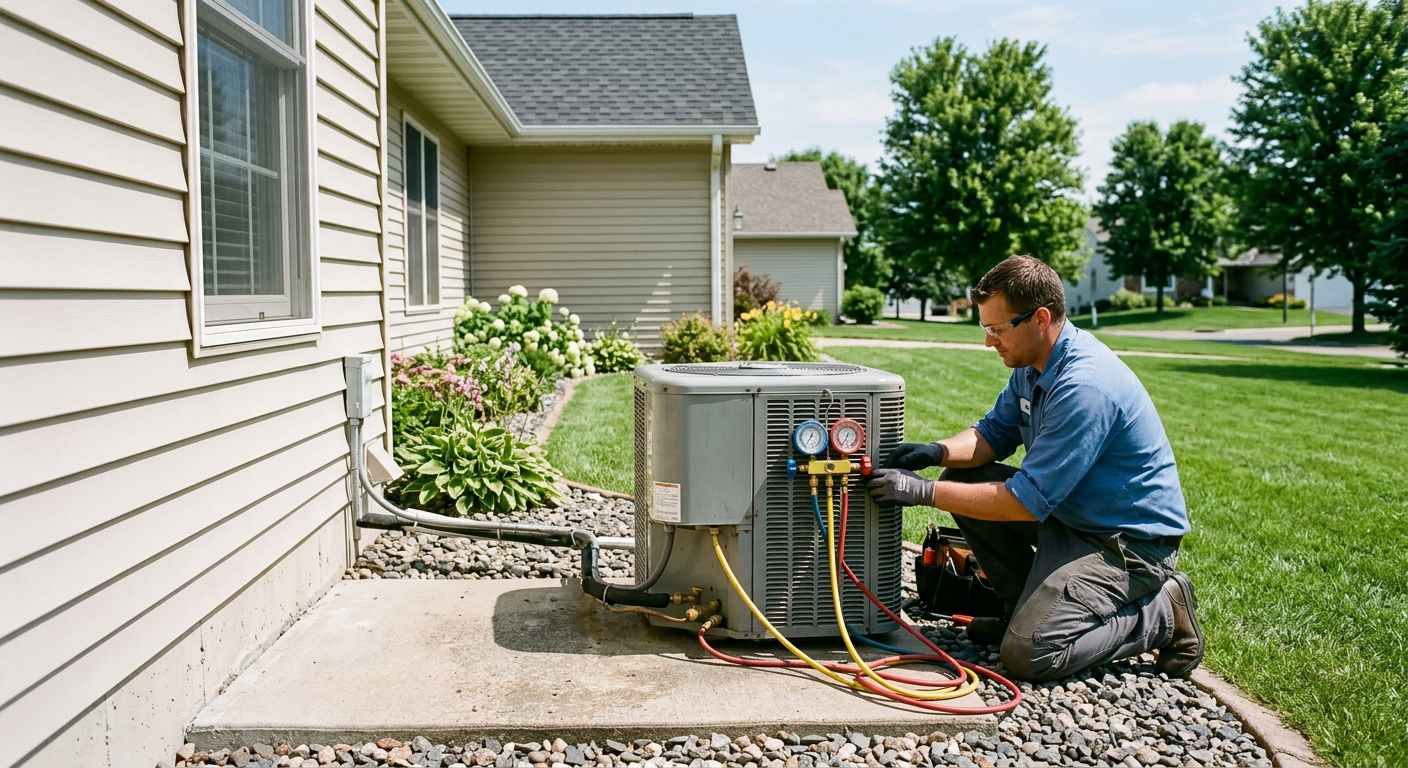
Common AC Problems
AC won't start
Nothing happens when the thermostat calls for cooling. Power, a tripped breaker, a failed capacitor or contactor, or a thermostat issue are typical causes.
Running but not cooling
The system runs but the air is warm. A dirty outdoor coil, low refrigerant from a leak, or an outdoor unit that isn’t running are common reasons.
Weak airflow
Cool air, but not much of it. Filters, the indoor blower, a frozen coil, or duct problems can restrict flow.
Short cycling
The AC turns on and off every few minutes. It can come from an oversized system, refrigerant problems, or electrical faults, and it leaves the house humid.
Unusual noise
Buzzing, clanking, or squealing from the outdoor unit or indoor blower usually means a part is failing or something is loose.
Uneven cooling
Upstairs rooms that stay hot while the basement is cold often point to airflow and ductwork rather than the AC itself.
Ice on the lines or coil
Frost on the refrigerant lines usually means restricted airflow or low refrigerant. Turn cooling off and run the fan only to let it thaw, then request service.
Things to Check Before Calling
Thermostat
Set it to Cool, lower the setpoint a few degrees below room temperature, and check the batteries.
Breakers
Central AC often has its own breaker in the main panel. Reset a tripped breaker once; if it trips again, leave it off.
Outdoor disconnect
There's usually a shutoff box on the wall near the outdoor unit. Make sure it hasn't been switched off, but don't open it up or touch any wiring.
Air filter
A clogged filter is one of the most common causes of weak airflow and frozen coils.
Outdoor unit
Clear away grass clippings, leaves, and cottonwood fluff from the sides of the unit and keep a couple of feet of open space around it.
Avoid opening the outdoor unit, handling refrigerant lines, or working on electrical components. If the system runs but is not cooling, turn it off to help protect the compressor.
AC Repair vs. Replacement
Most AC problems, like a failed capacitor, a bad contactor, or a dirty coil, are straightforward repairs. Replacement enters the conversation when the system is older, has a major failure such as the compressor, or has a refrigerant leak that keeps coming back.
Age matters: central air systems commonly last around 10 to 15 years. Older systems that use R-22 refrigerant, which is no longer produced, can be expensive to recharge after a leak.
Learn more about AC replacementAC Trouble in a Minnesota Summer
Air conditioners here sit idle for most of the year, so problems often stay hidden until the first hot, humid week. That is also when service schedules fill up fastest.
Running the AC briefly on a warm spring day, before you actually need it, is an easy way to find out early whether it starts and cools.
AC Repair FAQ
Ice usually forms when not enough warm air moves across the indoor coil (a dirty filter, a blocked return, or a blower problem) or when refrigerant is low. Turn cooling off, run the fan to thaw it, replace the filter if it is dirty, and request service if it happens again.
It is best to turn it off. Grinding, banging, or loud buzzing often means a motor, fan, or electrical part is failing, and continuing to run it can damage the compressor.
AC Repair in Ham Lake and the North Metro
Send a quick request online and we'll follow up to schedule a visit.