Furnace Replacement in Ham Lake, MN
Replacing a furnace is a big decision, and it rarely has to be made in a rush. Here's how to think through timing, sizing, and what to expect before you request a quote.
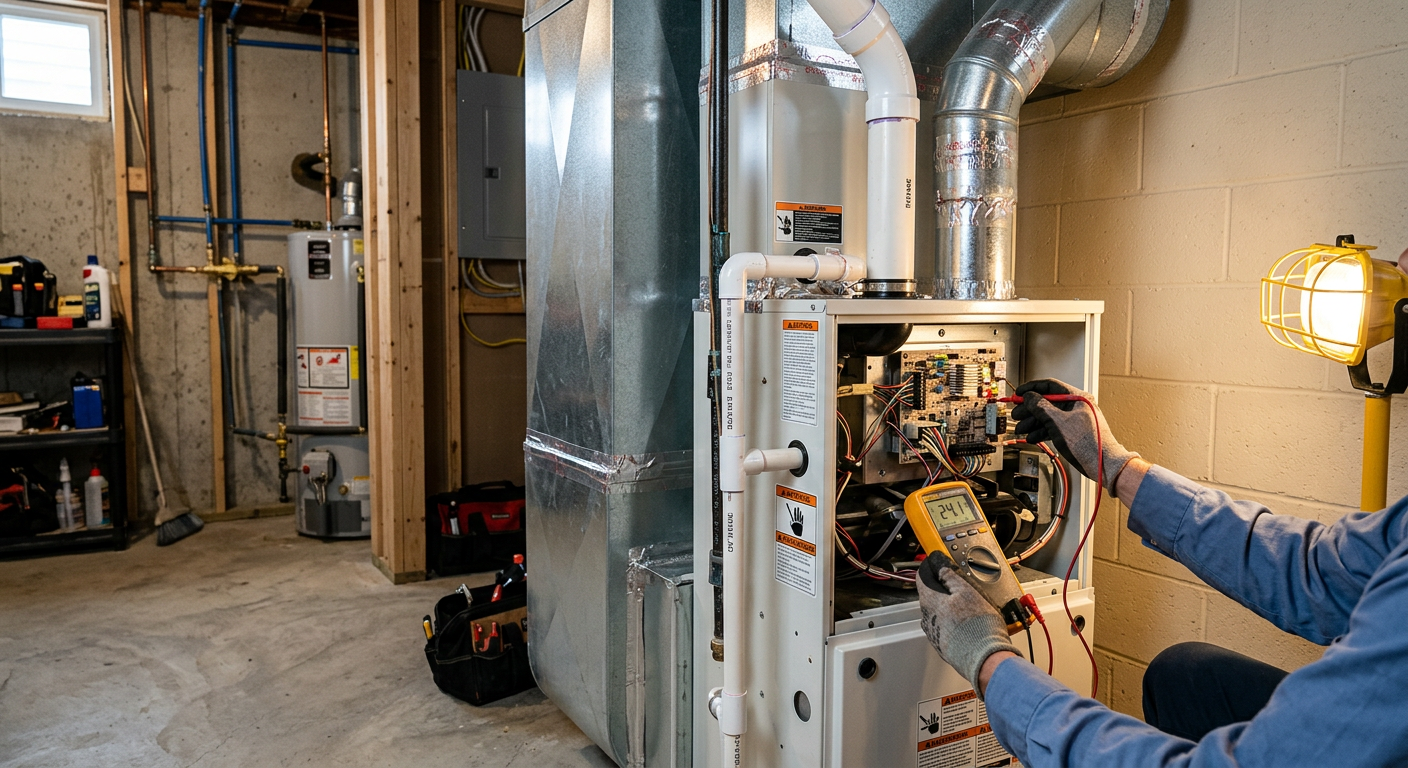
When Should You Consider Replacing a Furnace?
Age
Furnaces commonly last 15 to 20 years. Past that point, planning a replacement on your own schedule beats waiting for a failure.
Increasing repairs
When service calls become a yearly or seasonal event, the total spent on repairs adds up fast.
Reliability
If you don't trust the furnace to make it through a cold snap, that uncertainty has a real cost.
Uneven comfort
Hot and cold rooms, long run times, or a house that never feels warm can mean the furnace is worn, undersized, or poorly matched to the home.
Energy use
Rising gas bills without a change in usage often point to declining efficiency.
Major repair costs
Some failures, such as a cracked heat exchanger, often make replacement the more practical option, especially on an older unit.
Repair vs. Replace
Replacement isn't automatically the right answer. A younger furnace with an isolated problem, like a failed igniter or flame sensor, is usually worth repairing.
The case for replacement gets stronger when age, repair history, and cost line up: an older furnace, a pattern of breakdowns, and a quote for a major part. Comfort and efficiency goals matter too, since a repair restores the furnace you have rather than improving it.
A good recommendation lays out both options honestly so you can decide. If you're still troubleshooting, start with the common problems below.
See common furnace problems and repair optionsChoosing a Replacement Furnace
The right furnace depends more on your home than on any one feature.
Proper sizing
A furnace should be sized to the heating needs of the house, not simply matched to the old unit. An oversized furnace short cycles; an undersized one runs constantly on the coldest days.
Efficiency
AFUE is the share of fuel that becomes heat. Higher-efficiency condensing furnaces vent through plastic pipe and need a condensate drain, which affects installation.
Home characteristics
Square footage, insulation, windows, layout, and finished basements all change how much heat a home needs and where it goes.
Comfort
Single-stage furnaces run at full output. Two-stage and variable-speed models can run longer at lower output, which tends to mean steadier temperatures and quieter operation.
Existing ductwork and system
Ducts, venting, the gas line, and any central air coil sitting on the furnace all need to work with the new equipment.
What Happens During Furnace Replacement?
Every home is different, but the process generally follows these steps.
- 1
Assessment
A look at the current furnace, the home, ductwork, venting, and what you want to improve.
- 2
Options and quote
Recommended equipment and pricing, with the reasoning behind it.
- 3
Removal
The old furnace is disconnected and removed.
- 4
Installation
The new furnace is set and connected to gas, venting, electrical, ductwork, and the thermostat.
- 5
Startup and testing
The system is started, checked for safe and correct operation, and adjusted.
- 6
Walkthrough
You get an overview of the new system, filter changes, and what to watch for.
Timing depends on the equipment and the home. A schedule is confirmed with you once you choose an option.
Furnace Replacement FAQ
Not necessarily. If the AC is relatively young and working well, it can often stay. If it is near the end of its life, replacing both at once can simplify installation and ensure the indoor coil and furnace blower are matched. It is worth discussing during the quote.
Sometimes. If the furnace is old, unreliable, or expensive to run, replacing it on your own timeline avoids an emergency decision in the middle of winter. If it runs well and has been reliable, there is usually no rush.
Furnace Replacement in Ham Lake and the North Metro
Send a quick request online and we'll follow up to schedule a visit.