Furnace Repair in Ham Lake, MN
When the furnace stops keeping up, you want a clear explanation of what's wrong and what it will take to fix. Tell us what you're seeing and we'll follow up to arrange service.
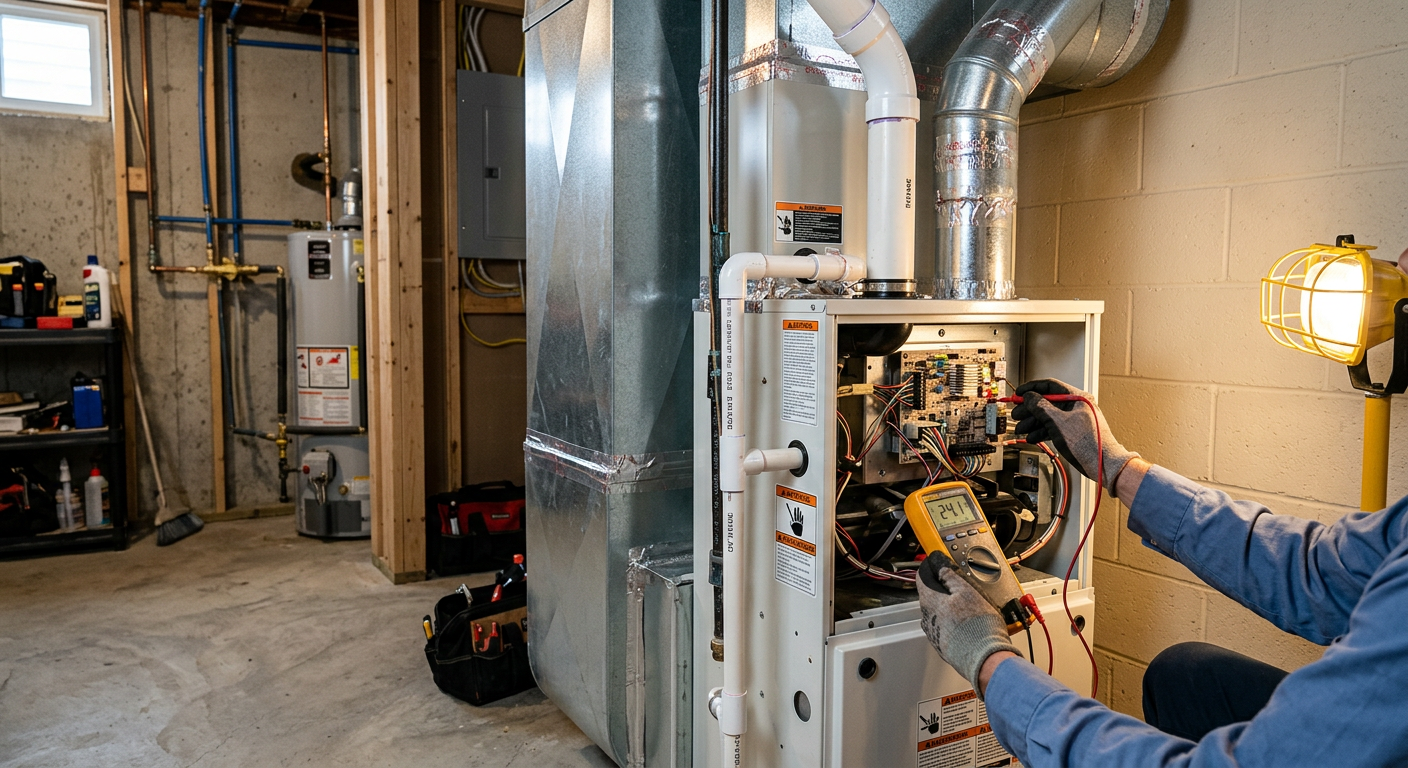
Furnace Problems We Can Help Diagnose
Most furnace calls start with one of these symptoms. Noting which one you have helps narrow down the cause.
No heat
The thermostat is calling for heat but nothing warm comes from the vents. Causes range from a tripped safety switch or failed igniter to a control or blower problem.
Furnace won't start
No click, no hum, no blower. This is often traced to power, a safety or door switch, or a control fault.
Running but not heating properly
The blower runs but the air is lukewarm, or the house never reaches the setpoint. Ignition, flame sensing, gas supply, and airflow are common suspects.
Short cycling
The furnace starts and shuts off every few minutes. A clogged filter, overheating, a dirty flame sensor, or thermostat placement can all cause it, and it wears parts quickly.
Unusual noises
Banging at startup, squealing, rattling, or grinding each point to different issues, from delayed ignition to blower motor wear. They are worth checking before they get worse.
Unusual smells
A brief dusty smell on the first cold day is normal. A burning or electrical smell that lingers is not, and should be looked at.
Weak airflow
Very little air from the registers while the furnace runs. Filters, the blower, duct restrictions, or closed dampers are typical causes.
Uneven heating
Some rooms stay cold while others are fine. This can come from ductwork and airflow balance, or a furnace struggling to keep up.
If you smell gas (a rotten-egg odor), leave the house right away and call your gas utility or 911 from outside. Do not operate switches or try to find the source.
What to Check Before Requesting Service
A few quick checks sometimes solve the problem, and they give a technician useful information if they don’t.
Thermostat settings
Confirm it is set to Heat with the setpoint a few degrees above room temperature. Replace the batteries if your thermostat uses them.
Breaker
Look for a tripped breaker labeled furnace or HVAC. Reset it once. If it trips again, leave it off and request service.
Furnace switch
Most furnaces have a light-switch-style power switch on or near the unit. Make sure it hasn’t been turned off by mistake.
Air filter
A badly clogged filter can make a furnace overheat and shut down. Replace it if it looks dirty.
Supply and return vents
Make sure registers are open and return grilles aren’t blocked by furniture, rugs, or storage.
Stop there. Don't remove furnace panels, try to relight burners, or work on gas lines or wiring. Those checks belong to a qualified technician.
Furnace Repair or Replacement?
Most furnace problems are repairable. When a system is older or failing often, it's worth weighing a few factors before putting more money into it.
- Equipment age
- Many furnaces last roughly 15 to 20 years. Near the end of that range, a repair buys less time.
- Repair frequency
- One repair in several years is normal. Several in a couple of seasons is a pattern.
- Repair cost
- A large repair on an aging furnace can approach a meaningful share of the cost of a new one.
- Comfort
- If the house is drafty, uneven, or never quite warm, a repair may not fix the real complaint.
- Efficiency
- Older furnaces typically turn less of their fuel into heat than current models.
- Reliability
- How much would a mid-winter breakdown cost you in disruption? That matters too.
Furnace Problems During Minnesota Winters
In a Minnesota winter, a working furnace isn't a convenience. During long stretches below zero, a system that quits overnight can leave a house cold quickly, and frozen pipes become a real risk.
Small changes usually show up before a breakdown: new noises, longer run times, a room that never warms up. Calling early is easier than calling at 2 a.m. in January.
On high-efficiency furnaces that vent through the side of the house, keep the outdoor intake and exhaust pipes clear of snow and ice. A blocked vent is a common reason these furnaces shut down after a heavy snowfall.
Furnace Repair FAQ
Describe the symptom, when it started, and anything you have already checked. A photo of the furnace and its rating label (usually inside the front panel area or on the side) helps identify the model and age. You can add photos in the request form.
A loud bang at startup, grinding, or a burning smell are reasons to turn the furnace off at the thermostat and request service. Running it can turn a smaller repair into a larger one. If you smell gas, leave the house and call your gas utility from outside.
Furnace Repair in Ham Lake and the North Metro
Send a quick request online and we'll follow up to schedule a visit.